
The Creative Machine: A Book
Escaping the Knowledge Cage in the Age of AI

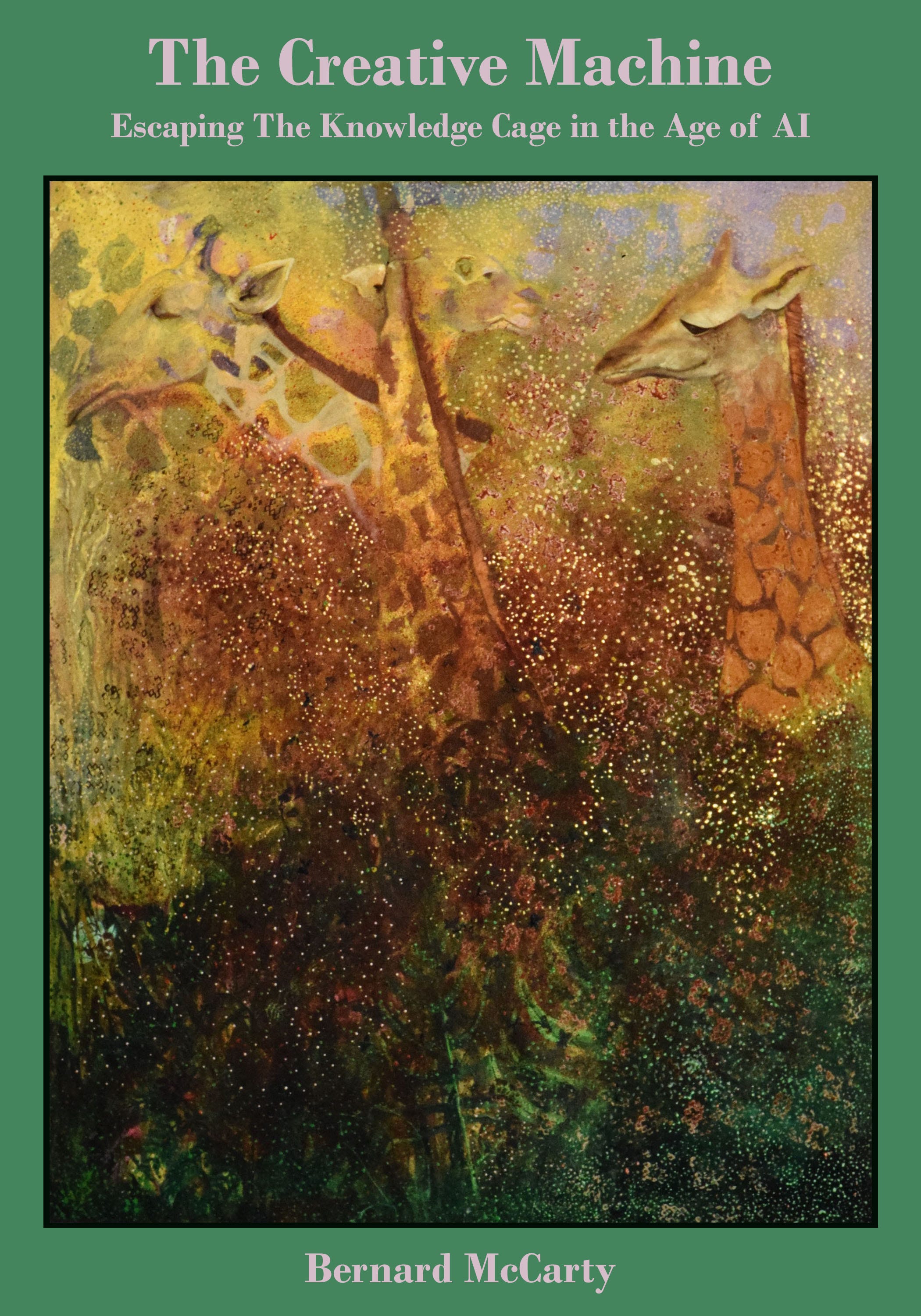
Book Cover by Pamina Stewart
Hello everyone. I have some news.
Over the past year, many of the posts on my Substack have circled around a set of connected questions. What can today’s AI systems really do? Why are the boldest claims often the least examined? How do we think clearly about machine intelligence in an age of relentless hype? And what might we lose if we get this wrong?
Those posts have now become a book.
The Creative Machine: Escaping the Knowledge Cage in the Age of AI is coming out in January 2026, and you can register your interest now on Leanpub:
Drawing on the philosophy of Karl Popper and David Deutsch, The Creative Machine offers a framework for understanding what today’s AI systems can and cannot do. Not through technical jargon, but through clear thinking about the nature of knowledge itself.
You will find out why even the most sophisticated large language models remain stuck at pattern-matching, unable to generate the genuine explanatory understanding that drives human progress. You will discover the difference between prediction and prophecy and why confident timelines for AGI are unjustified. And you will confront the Knowledge Cage: the risk that we might outsource our thinking to systems that can only recombine what already exists, locking ourselves into a future that is merely an optimisation of now.
The book includes practical tools for evaluating AI claims, worked case studies, and yes, an AI Bullshit Detector you can apply to any uncritical articles on AI and its associated unfettered-hype.
If you have been reading my Substack, some of the material will be familiar. But the book goes deeper, draws the threads together and, I hope, makes the argument in full. It is the version I would want someone to read if they only had time for one thing.
Also, I chose Leanpub for a specific reason: their model works well for readers.
When you buy a Leanpub book, you get free updates for life. If I improve a chapter, fix an error, or add new material after publication, you get it automatically. No need to buy a new edition. The book grows and you grow with it.
You can also choose your own price. There is a minimum (to keep me in coffee) and a suggested price, but you decide what feels right.
If you click through to the Leanpub page, you can sign up to be notified when the book is published. No commitment, no payment yet. Just a note in your inbox when it is ready.
If you want to go further and pre-order, you can do that too. Either way, I would be grateful.
This Substack has been the testing ground for these ideas. Your responses, pushbacks, and questions have shaped the book in ways I could not have anticipated.
Thank you for reading, for thinking and being creative.
More soon,
Bern